Moon First, Mars Forever: Why Lunar Base Jobs Could Be the Working-Class Ladder to the Stars
For most of American history, "going West" was the shorthand for economic reinvention. You packed up, you showed up, and if you worked hard enough, you carved out something that was yours. The frontier mythology is baked into how we think about opportunity in this country—even when the frontier itself has long since closed.
But here's the thing: it's opening again. Just not in any direction you can drive.
The push to build permanent human infrastructure on the Moon—driven by NASA's Artemis program, commercial players like SpaceX and Blue Origin, and a growing constellation of international partners—isn't just a scientific endeavor. It's a construction project. A logistics operation. A supply chain challenge. And like every major infrastructure build in American history, it's going to need a whole lot of people who know how to work with their hands, think on their feet, and solve problems that no textbook has covered yet.
The Moon as Job Site, Not Just Launch Pad
When most people picture a lunar base, they imagine astronauts in white suits doing Very Important Science. And sure, that's part of it. But the day-to-day reality of keeping humans alive and productive on the Moon looks a lot more like a remote oil platform or an Antarctic research station than a Hollywood blockbuster.
Someone has to maintain the life support systems. Someone has to manage the power grid—likely a combination of solar arrays and small nuclear reactors. Someone has to run the regolith processing equipment that'll eventually turn Moon dust into building materials, rocket propellant, and even water. These aren't jobs that require a PhD. They require training, technical skill, reliability, and the kind of practical problem-solving that plenty of working-class Americans already do every single day.
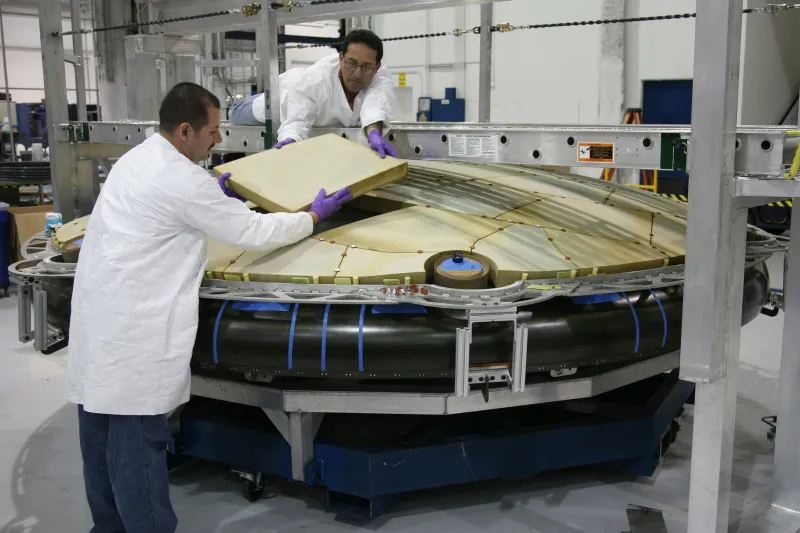
Aerospace technician Darnell Okafor, who currently works on satellite assembly in a facility outside of Huntsville, Alabama, puts it plainly: "I grew up watching people in my neighborhood get passed over for the 'good jobs' because they didn't have the right degree or the right connections. But the stuff I do every day—precision assembly, systems testing, troubleshooting under pressure—that's exactly what a lunar base is going to need. I'm not waiting for an invitation. I'm already building toward it."
Darnell's been taking online courses in space systems engineering through a community college partnership and keeps tabs on every Artemis contract announcement. He's not unusual. Across the country, a generation of technically skilled workers is quietly repositioning itself for a space economy that's arriving faster than most people realize.
Ownership, Stakes, and the New Homestead Act
Here's where things get genuinely interesting—and where the politics of space start to matter for regular people.
There's an ongoing debate in space policy circles about who actually owns the resources extracted from the Moon and, eventually, Mars. The 2015 U.S. Commercial Space Launch Competitiveness Act gave American companies and citizens the right to own resources they extract from space, even if no one can "own" the Moon itself. That's a significant legal foundation. And it raises a question that doesn't get asked nearly enough: could the workers who build and operate lunar infrastructure ever hold a stake in what they're building?
It's not as far-fetched as it sounds. Early models for space habitat companies are already experimenting with equity structures that include long-term crew members. Some advocates are pushing for something like a modern Homestead Act for space—a policy framework that would give workers who spend significant time on the Moon or Mars a formal economic stake in the infrastructure they help establish.
"The history of American expansion is full of examples where the people who did the actual work got left out of the wealth it created," says Dr. Priya Nambiar, a space policy researcher at a think tank focused on equitable technology access. "We have a chance to write a different story this time. But only if we're intentional about it from the very beginning."
That intentionality has to start now, while the frameworks are still being written and the infrastructure is still being designed. The decisions made in the next ten years will determine whether the space economy is another chapter in the same old story—or something genuinely new.
The Skills Gap Nobody's Talking About
Here's a practical reality that space agencies and companies are quietly grappling with: the talent pipeline for deep-space operations is nowhere near ready for what's coming.
NASA and its commercial partners need thousands of trained technicians, not just a handful of astronaut-scientists. They need people who can repair equipment in a vacuum, manage waste systems in low gravity, operate autonomous mining machinery, and handle the psychological demands of long-duration isolation. Many of those skills overlap heavily with trades that already exist—HVAC technicians, electricians, plumbers, heavy equipment operators, and emergency medical technicians all have direct analogs in the lunar base environment.
For workers in those fields, especially those in parts of the country where traditional industries are shrinking, this represents a genuine opportunity. Training programs are starting to emerge. Bootcamps focused on space systems. Community college curricula being updated to include aerospace applications. Apprenticeship pipelines being quietly built between trade unions and aerospace contractors.
Marcela Reyes, an HVAC technician from outside of Phoenix, started cross-training in closed-loop environmental systems two years ago after reading about the life support challenges on long-duration missions. "I figured, I already understand how to keep air breathable and temperatures stable in brutal conditions—Arizona summers are no joke. Scaling that up to a habitat on the Moon? That's just a bigger, weirder version of my job."
She's now part of an informal network of tradespeople who share resources, job postings, and training tips in online forums dedicated to space workforce development. It's grassroots, it's scrappy, and it's exactly the kind of bottom-up organizing that historically precedes a major economic shift.
Mars Is the Destination. The Moon Is Where You Earn Your Stripes.
For the space exploration community, the Moon has always been framed as a proving ground—a place to test the technologies and techniques that will eventually get us to Mars. That framing is correct, but it's incomplete.
The Moon is also where the space workforce gets built. The engineers, technicians, operators, and yes, the future Martian homesteaders—they're going to cut their teeth on lunar operations first. The career pathways being established right now, the training programs being developed, the labor policies being drafted: all of it will shape who gets to be part of humanity's expansion into the solar system.
If we get this right—if we make sure that the lunar economy is built with equity and access baked in from the start—then the road to Mars runs through communities that have historically been left behind. Through trade schools and community colleges. Through the Darnells and Marcelas who are already positioning themselves for a future that most people haven't started imagining yet.
The frontier is open again. And this time, it belongs to everyone.