No Degree, No Problem: How the Commercial Space Boom Is Handing Working-Class Americans a Ticket to Mars
The Space Industry Has a Dirty Little Secret—and It's a Good One
For decades, "working in space" meant one thing: you either had a PhD from a prestigious university or you were watching from your couch. The narrative was airtight. Space was for rocket scientists, and rocket scientists came from a very specific zip code of privilege.
That story is cracking open.
The commercial space industry—led by giants like SpaceX and Blue Origin but increasingly populated by dozens of smaller players—is quietly building one of the most accessible skilled-labor pipelines in modern American manufacturing. And a significant chunk of that work is pointed directly at Mars.
We're not talking about symbolic inclusion or a feel-good press release. We're talking about real jobs, real wages, and real pathways for Americans who never set foot in a four-year engineering program.
What These Jobs Actually Look Like
Let's get concrete, because vague optimism doesn't pay rent.
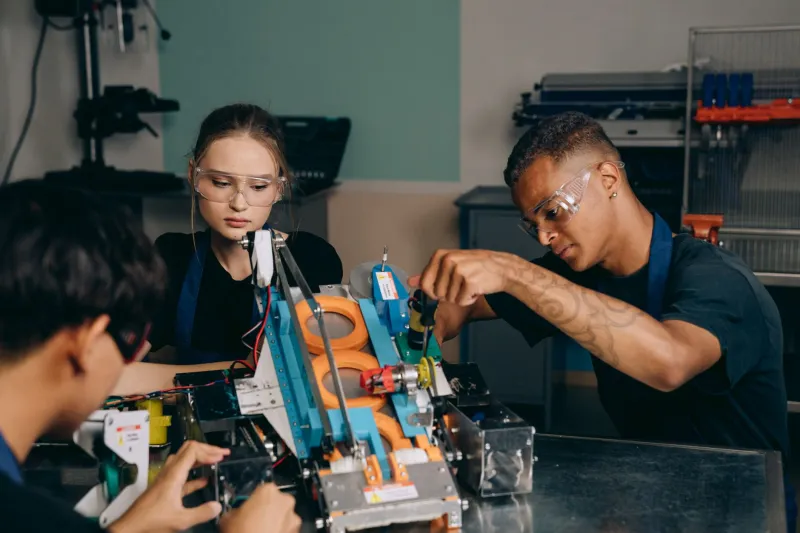
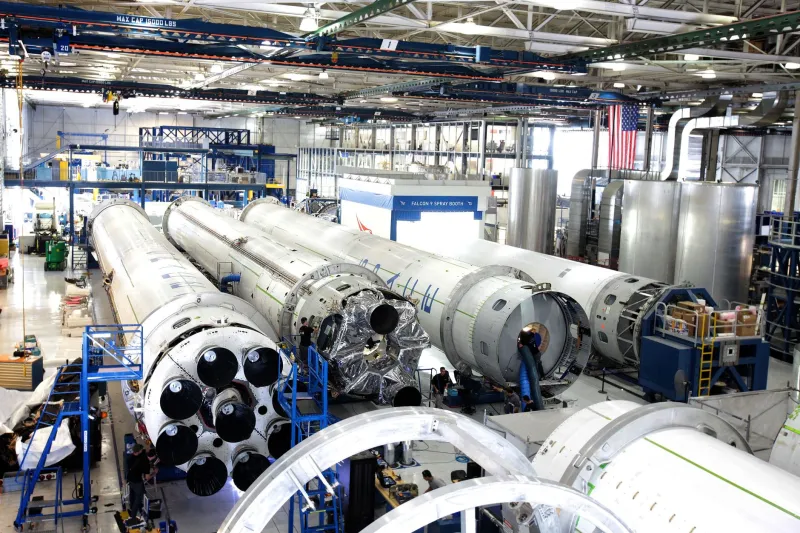
SpaceX's facilities in Hawthorne, California, Boca Chica, Texas, and Cape Canaveral, Florida employ thousands of workers in roles that have nothing to do with astrophysics. Think precision machinists running CNC equipment to manufacture Raptor engine components. Think composite technicians layering carbon fiber on Starship structures. Think quality control inspectors, avionics assembly technicians, and fabrication welders—roles that require skill, training, and attention to detail, but not a bachelor's degree.
Blue Origin, headquartered in Kent, Washington, operates similarly. Their BE-4 rocket engine production line relies heavily on skilled tradespeople. The company has actively recruited from community college welding and machining programs in the Pacific Northwest.
And then there's the broader ecosystem: suppliers, subcontractors, and startups from Alabama to Arizona that feed parts and services into the commercial space supply chain. Companies like Relativity Space in Long Beach, Ursa Major in Colorado, and Rocket Lab in Wallops Island, Virginia are all hiring—and all paying wages that, in many regions, significantly outpace what the same skills would earn in automotive or general manufacturing.
Median pay for aerospace manufacturing technicians in Texas currently hovers around $55,000–$75,000 annually, with experienced workers in specialized roles clearing six figures. That's not Silicon Valley money, but it's solid, middle-class money—the kind that buys a house in Boca Chica or puts kids through school in Brevard County.
The Apprenticeship Angle Nobody's Talking About
Here's where it gets genuinely exciting for people who are just starting out.
SpaceX has quietly expanded its apprenticeship and internship programs beyond the usual suspects. While the headline internships still attract Ivy League engineering students, the company has partnered with technical schools and workforce development programs to bring in apprentices for manufacturing and maintenance roles. Some of these programs are paid from day one.
Blue Origin has gone further in making this explicit. Their registered apprenticeship program—certified through the U.S. Department of Labor—offers structured on-the-job training in fields like electrical systems, mechanical assembly, and quality assurance. Participants earn while they learn, with wages that increase as they advance through the program. No tuition debt required.
This matters because apprenticeships are one of the oldest and most effective tools for building generational wealth in working-class communities. Plumbers, electricians, and ironworkers have used this model for over a century. Now it's landing in the space industry.
If you're in a city with a community college that offers machining, welding, or electronics programs—and that's most cities—you may already be closer to a space career than you think.
Why This Connects to Mars (Not Just Rockets)
It's worth zooming out for a second, because there's a bigger picture here that's easy to miss.
Starship, SpaceX's fully reusable super-heavy launch system, is explicitly designed for Mars. Elon Musk has said repeatedly that the entire point of the vehicle is to make humanity multiplanetary. Every Raptor engine component that gets machined in Hawthorne, every composite panel that gets laid up in Boca Chica, every wiring harness that gets assembled and tested—all of it is infrastructure for the Mars program.
That means the welder in South Texas working on Starship's stainless steel tank sections isn't just doing a job. They're building the ship that might carry the first humans to another planet. That's not hyperbole. That's the supply chain.
Blue Origin's New Glenn rocket, meanwhile, is designed to support the broader commercial launch ecosystem that will be essential for getting Mars-bound cargo off Earth affordably. The technicians assembling those engines in Kent are part of that story too.
Mars colonization, if it happens, won't be built by a handful of geniuses in lab coats. It'll be built by an army of skilled workers who know how to make things with their hands, troubleshoot systems under pressure, and show up every day and do the work. That's always been how big things get built in America—from the transcontinental railroad to the Apollo program's manufacturing base in Bethpage and Downey.
What's Still Missing
Let's be honest: this isn't a perfect picture.
The commercial space industry still skews heavily toward workers who live near existing facilities—coastal Texas, Southern California, Florida's Space Coast, the Seattle area. If you're in rural Appalachia or the Mississippi Delta, the geographic barrier is real. Remote work options in manufacturing are, by definition, limited.
There are also legitimate concerns about labor conditions at some of these companies. SpaceX in particular has faced scrutiny over long hours and workplace safety issues. Workers considering these roles should research labor conditions, look into union organizing efforts where they exist, and advocate for fair treatment.
And while the apprenticeship programs are growing, they're not yet at the scale needed to make a dent in the broader workforce access problem. More investment—from both the companies and from federal workforce development programs—is needed to expand reach into underserved communities.
How to Get Started Right Now
If this sounds like something you want to pursue, here are some genuinely actionable starting points:
Check your local community college. Programs in CNC machining, welding, composites manufacturing, and electronics technician training are often available for under $5,000 total—sometimes much less with Pell Grants or workforce development funding.
Look at the DOL's apprenticeship finder. The Department of Labor's Apprenticeship.gov database lists registered programs, including aerospace-related ones, by state.
Apply directly to space company career pages. SpaceX, Blue Origin, Rocket Lab, and others all post non-engineering manufacturing and technician roles. These listings don't always get the same attention as software engineering jobs, so the competition can be lower.
Follow local economic development announcements. When space companies expand or open new facilities, they often partner with local workforce boards. Getting ahead of these hiring waves is a real advantage.
The commercial space industry isn't going to hand anyone a career. But it is, for the first time in a long time, building real on-ramps for people who weren't born into the right circumstances. That matters—not just for those individuals, but for the kind of Mars program we actually want to build.
A Mars that belongs to everyone has to be built by everyone. The good news is, that work is already underway.