Telescopes in the Driveway, Data on NASA's Servers: Amateur Stargazers Are Changing Mars Science
The Guy Next Door Is Mapping Dust Storms on Mars
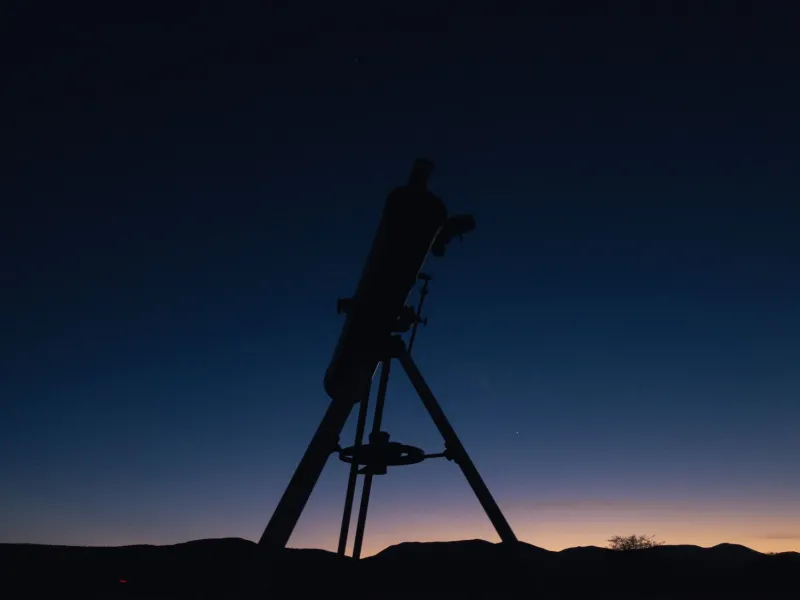
Somewhere in suburban Ohio, a retired schoolteacher named Dave spends clear autumn nights in his driveway with an eight-inch reflector telescope and a modified webcam. He's not just stargazing. He's logging Martian atmospheric activity and uploading it to a database that professional planetary scientists at universities and NASA-affiliated institutions actually consult.
This isn't a feel-good story about a quirky hobby. It's a quiet revolution in how planetary science gets done — and it's happening in driveways, backyards, and community observatory parking lots all across the United States.
Amateur astronomers have always been a scrappy, passionate bunch. But over the last decade or so, the combination of affordable imaging equipment, open-access scientific databases, and coordinated citizen science networks has turned that passion into genuine, publishable data. Mars, with its dynamic weather systems, seasonal polar cap changes, and surface features visible through even modest telescopes, turns out to be a particularly good target for distributed observation.
Why Mars Needs More Eyes Than Any One Institution Can Provide
Here's something that might surprise you: professional observatories can't watch Mars all the time. Big telescopes are expensive and oversubscribed, with researchers competing for limited viewing windows. Space missions like Perseverance are extraordinary, but they're focused on specific surface targets. What scientists often lack is consistent, wide-coverage atmospheric monitoring — the kind of longitudinal data you get from watching the same planet night after night, across many different locations and viewing angles.
That's exactly the gap that amateur observers fill.
Mars has a famously dramatic atmosphere. Dust storms can erupt within days and grow to encircle the entire planet. Cloud formations shift with the seasons. Polar ice caps expand and contract in ways that still hold scientific surprises. Tracking all of this in real time requires more observers than any single research program can deploy — which is where a retired teacher in Ohio, a software engineer in Tucson, and a high school student in Vermont all start to matter.
Programs like the Association of Lunar and Planetary Observers (ALPO) Mars Section and the British Astronomical Association's Mars Section (which has plenty of American contributors) have been coordinating amateur Mars observations for decades. More recently, platforms like the Planetary Virtual Observatory and Laboratory (PVOL) allow amateur imagers to submit their photographs directly into searchable archives used by professional researchers worldwide.
What "Good Enough" Equipment Actually Looks Like
Let's talk gear, because this is where a lot of people assume they're already out of the running. They're not.
A telescope with an aperture of six inches or more — the kind you can find used on Craigslist or at a local astronomy club swap meet for a few hundred dollars — is capable of capturing Mars surface features and atmospheric phenomena during opposition, the period when Earth and Mars are closest in their orbits. Pair that with a planetary camera (some run under $100) or even a newer smartphone adapter, and you have a functional Mars observation setup.
Software like AutoStakkert and Registax, both free, allow you to stack and process video frames into surprisingly sharp still images. The learning curve is real but not steep. Astronomy clubs — and there are hundreds of them across every state — often host workshops specifically on planetary imaging. Many of these clubs have loaner equipment programs for members who are just getting started.
The point isn't that anyone can produce Hubble-quality imagery from their backyard. The point is that consistent, well-documented observations made with modest equipment, submitted reliably over time, carry genuine scientific value. Frequency and geographic diversity matter as much as raw image resolution when you're trying to track a planet-wide weather event.
Real Contributions, Real Recognition
Amateur observations have shown up in peer-reviewed research more than most people realize. Studies tracking the 2018 global Martian dust storm — one of the most severe on record, which ultimately ended the Opportunity rover's mission — drew on amateur imaging data to help characterize the storm's development and spread. When professional observing time is limited, amateur networks provide the connective tissue between data points.
Contributors to ALPO's Mars Section have their observations archived and credited. Some have been acknowledged in published papers. A few have gone on to collaborate directly with professional researchers, not because they went back to school or got a grant, but because they showed up consistently and their data was good.
This matters beyond any individual success story. It's proof that scientific contribution isn't gated behind credentials or institutional access. The knowledge belongs to everyone willing to put in the time — and the data belongs to everyone too, since most of these archives are publicly accessible.
How to Actually Get Started
If any of this is making you want to drag a telescope out of storage or finally join that astronomy club you've been eyeing, here's a practical path forward.
First, find your local club. The Astronomical League maintains a directory of affiliated clubs across the US, and most are welcoming to beginners. Many host public star parties where you can look through different telescopes and talk to experienced planetary observers before spending a dime on equipment.
Second, bookmark the ALPO Mars Section website. They publish observing guides each Martian apparition (the window when Mars is well-positioned for observation from Earth), and they make it straightforward to submit your own images and observations once you're ready.
Third, learn the opposition cycle. Mars comes to opposition roughly every 26 months, and the months surrounding opposition are when amateur observation is most productive. The next favorable opposition gives you plenty of time to get your feet under you before Mars is at its best.
Fourth — and this one matters — don't wait until you think you're ready. Submit early observations even if they're imperfect. The community is genuinely supportive, and the act of submitting teaches you more than any tutorial will.
The Bigger Picture
There's something deeply right about the idea that the planet humanity is most seriously considering as a second home should be watched over by more than a handful of well-funded institutions. Mars belongs to the future of our species — which means the science of understanding it should be as broadly participatory as possible.
The backyard astronomers quietly uploading their images on weeknights aren't just hobbyists. They're part of the infrastructure of planetary science. They're demonstrating, observation by observation, that space exploration doesn't have to be a spectator sport.
You've got a clear sky tonight. Mars is up there. What are you waiting for?