Soldering Irons and Starships: Meet the Backyard Builders Already Designing Mars Solutions
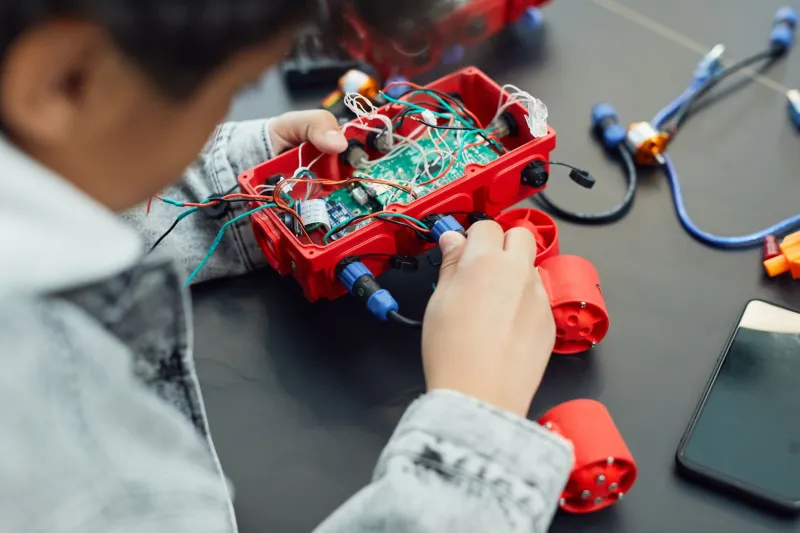
Somewhere in suburban Ohio, a high school shop teacher named Marcus is stress-testing a 3D-printed regolith scoop at his kitchen table. In a rented garage in Albuquerque, a former auto mechanic named Deja is wiring a six-wheeled rover prototype she assembled from salvaged parts and open-source schematics. And in a tiny apartment in Portland, a 22-year-old named Theo is running thermal simulations on habitat insulation designs using free software he downloaded at 2 a.m.
None of them work for SpaceX. None of them have aerospace degrees. And all of them are doing legitimate, meaningful work toward getting humans to Mars.
This is the DIY space movement — and it's bigger, weirder, and more consequential than most people realize.
The Maker Ethos Meets the Final Frontier
The maker movement has been quietly reshaping American culture for over a decade. Hackerspaces, community fab labs, and Maker Faires turned hobbyist tinkering into a serious creative force. What's newer — and genuinely exciting — is how that same energy is being aimed at space.
Open-source aerospace projects have exploded in recent years. Communities like OpenRocket, the Open Source Rover Project from NASA's Jet Propulsion Laboratory, and platforms like Hackaday and GitHub have handed ordinary people the blueprints, the code, and the community support to build things that would've seemed absurd for a civilian a generation ago.
NASA's Open Source Rover project is a perfect example. Released publicly so that anyone with about $2,500 and some patience can build a functional six-wheeled rover based on actual Mars rover design principles, it's been assembled by students, hobbyists, and curious retirees across the country. The documentation is thorough. The community forums are active. The barrier to entry is a weekend and a willingness to learn.
That's not charity. That's democratization.
What They're Actually Building
Let's be specific, because vague inspiration doesn't do these folks justice.
Backyard rocketeers affiliated with groups like the Tripoli Rocketry Association are pushing amateur high-power rocketry into genuinely technical territory — testing aerodynamics, recovery systems, and propulsion concepts that mirror real engineering challenges. Some are experimenting with 3D-printed nozzle components, iterating on designs the way any prototyping team would, just without the overhead.
Maker communities are tackling life support problems, too. Hydroponic and aeroponic growing systems — critical for feeding a Mars colony — are being refined in basements and community gardens nationwide. The hardware is cheap. The knowledge is shared freely online. And the lessons learned about plant growth in controlled, resource-limited environments are genuinely applicable to what a Martian greenhouse will need to do.
Then there's the habitat design crowd. Groups of architects, engineers, and enthusiastic amateurs are submitting entries to NASA's 3D-Printed Habitat Challenges and similar competitions, using consumer-grade printers and creative material science to prototype structures that could theoretically be built from Martian soil. One team from a Midwest community college took home prize money a few years back. They weren't outsiders crashing the party — they were the party.
Why Open Source Is the Great Equalizer
Here's the thing about corporate aerospace: it runs on proprietary everything. Designs are trade secrets. Processes are locked behind NDAs. The knowledge stays inside the building.
Open-source space culture flips that completely. When a maker in rural Tennessee figures out a better way to seal a 3D-printed pressure vessel, they post it. When a team in Minneapolis solves a power management problem on their rover prototype, they document it and share it on GitHub. The whole ecosystem gets smarter, faster, because no one's hoarding the insight.
This model isn't just feel-good philosophy — it's pragmatically powerful. Some of the most significant advances in software came from open-source communities working without corporate backing. There's no reason the same dynamic can't play out in hardware, especially as fabrication tools get cheaper and more capable every year.
Consumer-grade 3D printers that cost under $300 can now produce parts with tolerances that would've required a machine shop twenty years ago. CNC routers, laser cutters, and electronics prototyping tools are available at makerspaces in most mid-sized American cities, often for a modest monthly membership fee. The technical floor keeps dropping, and the ambition of the people stepping over it keeps rising.
The Community That Makes It Work
Makers don't succeed in isolation. The real engine behind this movement is community — online forums, local clubs, regional maker fairs, and the kind of generous knowledge-sharing culture that defines the best of what the internet was supposed to be.
Discord servers dedicated to amateur rocketry have thousands of members helping each other troubleshoot. Reddit communities like r/DIYRockets and r/SpaceEngineers blend simulation culture with real-world hardware discussion. Local chapters of groups like the American Institute of Aeronautics and Astronautics have student and amateur branches where people with no institutional affiliation can connect with working engineers.
For a lot of people in this movement — especially those who grew up without access to elite schools or expensive extracurriculars — these communities are the education they didn't get elsewhere. The mentorship is real. The feedback is honest. And the shared goal of actually getting to Mars someday gives it all a sense of purpose that's hard to manufacture.
Does Any of This Actually Matter?
Skeptics might ask whether a garage rover or a backyard rocket has any real bearing on what happens at a Mars launch facility in fifteen years. It's a fair question. And the answer is: more than you'd think.
Innovation in aerospace has always been partially driven by people who weren't supposed to be in the room. The early days of American rocketry were full of amateurs, oddballs, and self-taught experimenters who built things in sheds and vacant lots. Some of those people ended up shaping the entire trajectory of the space program.
The modern version of that story is already being written. Engineers at major aerospace companies didn't appear fully formed — many of them tinkered first, built first, broke things first. The maker pipeline is a real talent pipeline, and it pulls from communities that traditional aerospace recruiting often misses entirely.
Beyond the individual career paths, the collective knowledge generated by thousands of makers experimenting with Mars-relevant problems — pressure, dust, thermal management, power systems, food production — is a genuine resource. It's distributed, it's open, and it belongs to everyone.
You Don't Need Permission
The most radical thing about the DIY space movement is also the simplest: you don't have to wait for anyone to let you in.
You can download the NASA rover schematics tonight. You can join an online rocketry community this weekend. You can print a test part, wire a sensor array, grow a plant under a grow light and measure everything obsessively, and contribute what you learn to a community that's actively working on the same problems that Mars mission planners are wrestling with in conference rooms right now.
Mars for the Many has always believed that the future of space exploration shouldn't be decided by a handful of billionaires and credentialed gatekeepers. The backyard builders are living proof that it doesn't have to be. They're already out there, soldering and iterating and sharing — building tomorrow's Mars tech one weekend project at a time.
The garage door is open. Come on in.