Red Planet, Green Paycheck: The Mars-Adjacent Jobs Hiring Right Now That Don't Require a Rocket Science Degree

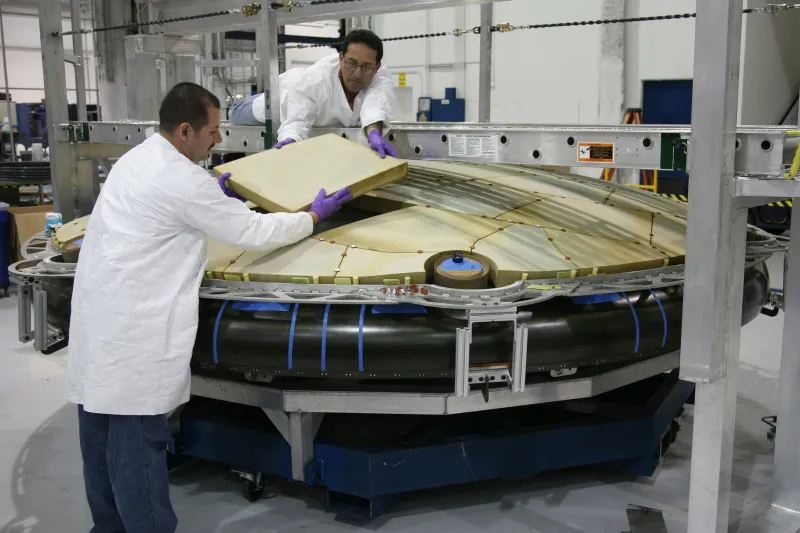
Photo: factory worker assembling satellite components aerospace manufacturing, via images.rawpixel.com
When most people think about working in the space industry, they picture a NASA control room full of MIT graduates in matching polo shirts. But spend a few hours scrolling through job boards on Indeed, LinkedIn, and USAJobs, and a very different picture starts to emerge. The Mars economy—the sprawling ecosystem of companies building the hardware, systems, and infrastructure that will eventually get humans to the Red Planet—is quietly putting working Americans to work right now, no astrophysics degree required.
We dug into the job listings, talked to people who made the jump, and mapped out where the real opportunities are hiding in plain sight.
The Industries You're Not Thinking About (But Should Be)
When we talk about Mars-adjacent industries, we're not just talking about SpaceX or Boeing. We're talking about a supply chain that stretches from factory floors in Ohio to hydroponic research labs in Arizona. Three sectors are exploding right now:
Satellite Manufacturing and Assembly — Companies like Rocket Lab, Maxar Technologies, and a growing number of regional suppliers need skilled assemblers, quality control technicians, and logistics coordinators. A posting from Maxar's facility in Westminster, Colorado listed a Spacecraft Assembly Technician role starting at $28–$34 an hour, with the primary requirement being experience in electronics assembly or manufacturing—not a degree. Similar roles at Rocket Lab have listed starting salaries in the $55,000–$70,000 range for candidates with community college credentials or military technical training.
Life Support Systems — This one surprises people. The technology being developed for closed-loop life support on Mars—air recycling, water purification, waste processing—overlaps heavily with industries like HVAC, water treatment, and industrial filtration. Sierra Space and Collins Aerospace both posted openings in 2024 for Environmental Control Systems Technicians that listed HVAC certification or wastewater treatment experience as qualifying credentials. Salaries ranged from $60,000 to $85,000 depending on location and experience level.
Advanced Materials and Composites — Mars habitats, spacecraft hulls, and pressure vessels all require specialized materials. Companies like Hexcel, Toray Composite Materials America, and Teijin Carbon America are actively hiring composites technicians and materials processors at facilities in Washington, Utah, and South Carolina. Entry-level composites layup technicians often start around $22–$26 an hour, with experienced workers earning well over $75,000 annually.
Real People, Real Transitions
Marcus T., 38, spent twelve years as a plumber in the Memphis area before a friend forwarded him a job listing for a Fluid Systems Technician at a life support component supplier outside Huntsville, Alabama. "I almost didn't apply because I thought I wasn't qualified," he told us. "But the job description basically described what I'd been doing for a decade—pressure testing, leak detection, pipe routing. I just hadn't done it in a space context."
He got the job. He's now earning $72,000 a year and recently completed a company-sponsored certification in aerospace quality standards (AS9100). "The hardest part was believing I belonged there," he said. "The work itself? I figured it out pretty fast."
Similar stories are playing out across the country. Janelle R., a former auto assembly line worker from Detroit, transitioned into satellite component manufacturing after her plant closed in 2022. She used a Michigan Works! workforce development grant to complete a precision machining refresher course, then landed a role at a Tier 2 satellite supplier. "The machines were different, but the mindset was the same," she said. "Tight tolerances, documentation, quality checks. I was ready."
Where to Actually Look
Here's the practical part. These jobs aren't always labeled as "space jobs," which is why so many people miss them. Try searching for these titles on major job boards:
- Composites Technician or Composite Layup Technician
- Spacecraft Assembly Technician
- Environmental Control Systems Technician (filtered by aerospace or defense industry)
- Fluid Systems Technician
- Quality Assurance Technician – Aerospace
- Thermal Systems Technician
Also worth bookmarking: the Space Workforce 2030 initiative, which maintains a database of space-sector job openings specifically targeting workers without traditional aerospace backgrounds. The Manufacturing USA network, which includes institutes like America Makes (focused on 3D printing for aerospace), also posts apprenticeship and training opportunities that feed directly into these pipelines.
If you're near a military base or a defense corridor—think Huntsville, Colorado Springs, the Space Coast in Florida, or the greater Seattle area—local workforce development boards often have sector-specific programs funded by state economic development dollars. These programs frequently include paid training stipends.
The Skills That Transfer (And the Ones Worth Adding)
The overlap between traditional trades and Mars-economy jobs is bigger than most people realize. Electricians, welders, machinists, HVAC technicians, and even experienced construction workers carry skills that directly apply. The gaps are usually in documentation practices (aerospace requires meticulous records), quality standards (AS9100 certification is a common ask), and materials familiarity.
The good news? AS9100 training is available online through providers like Exemplar Global and the American Society for Quality (ASQ) for a few hundred dollars. Many employers will reimburse this cost once you're hired—and some will pay for it upfront as part of a conditional offer.
The Bigger Picture
Here at Mars for the Many, we've always believed that the path to the Red Planet runs through the working people who build things, fix things, and figure things out with their hands. The Mars economy isn't waiting for the future—it's already here, and it's already hiring. The question is whether working Americans know where to look.
Now you do.