Your Town Could Be Training the First Mars Settlers—Three Communities Already Are
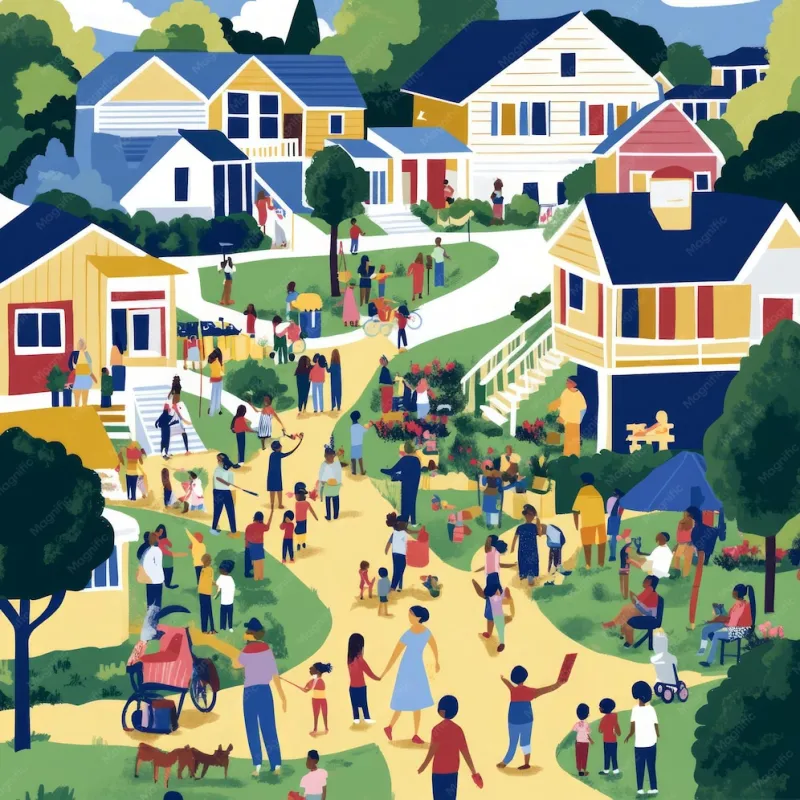
Photo: community maker space students building STEM projects diverse group, via img.freepik.com
Here's a question your city council probably hasn't asked yet: What would it look like to build a Mars-ready community?
It sounds like a thought experiment. But in pockets of America—from a mid-sized Texas city to a tribal community in New Mexico to a Chicago neighborhood trying to reinvent itself—local leaders and grassroots organizers are building exactly that. They're calling them different things: innovation hubs, STEM corridors, resilience centers. But the underlying logic is the same. If we want space exploration to belong to everyone, the preparation has to happen at the community level, long before anyone's strapping into a rocket.
And as it turns out, the infrastructure you'd build to get a community Mars-ready is also just... really good infrastructure. Hydroponic farms improve food security. Maker spaces create jobs. STEM programs keep young people engaged. The Mars angle isn't a gimmick—it's a framing device that makes the work feel urgent, exciting, and connected to something larger than any single neighborhood.
Let us take you on a tour.
San Marcos, Texas: The Mid-Size City Betting on Aerospace Workforce Development
San Marcos sits between Austin and San Antonio, right in the middle of what economic development officials have started calling the "Texas Space Corridor." With SpaceX's Starbase facility in Boca Chica, major defense contractors in San Antonio, and a growing constellation of aerospace suppliers throughout the region, city leaders recognized a few years ago that their workforce wasn't positioned to capture the jobs heading their way.
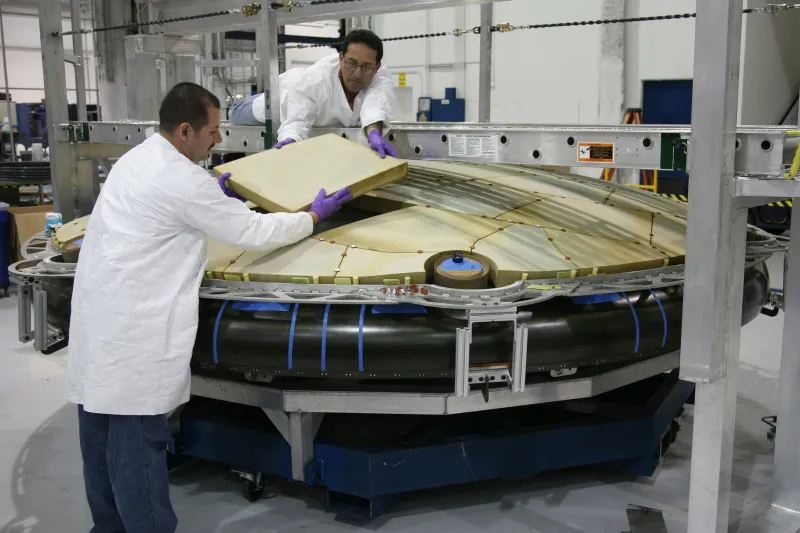
The response was the Hays County Aerospace Readiness Initiative, a public-private partnership between Texas State University, the local community college (Alamo Colleges), and a coalition of manufacturers. The initiative includes a composites fabrication lab open to enrolled students and community members with basic safety training, a mentorship pipeline connecting high schoolers with local aerospace workers, and—most visibly—a community hydroponic greenhouse on the Texas State campus that doubles as a life-sciences teaching facility.
"We're not just training engineers," said one program coordinator we spoke with. "We're training people to think in systems. How does water cycle? How does food grow in a closed environment? How do you troubleshoot when something goes wrong and you can't just call for help? Those are Mars questions. They're also just good questions."
Enrollment in the initiative's certificate programs has grown by 34% since 2022. Several graduates have already been hired by regional aerospace suppliers.
Albuquerque's South Valley: Urban Reinvention Through Space Literacy
The South Valley neighborhood in Albuquerque isn't the first place you'd think of when someone says "space hub." It's a predominantly Latino, working-class community with high rates of poverty and historically limited access to STEM education. But it's also home to Somos STEM, a nonprofit that has spent the last four years building what its founder describes as "a neighborhood that thinks like a crew on a long mission."
The centerpiece is a community maker space housed in a converted warehouse, equipped with 3D printers, basic electronics workbenches, and a small but serious robotics program. But what sets Somos STEM apart is its explicit focus on the whole skillset Mars requires—not just technical competency, but communication, conflict resolution, and cross-cultural teamwork. (More on why those matter in our next feature.)
"We tell the kids here: the people going to Mars aren't going to be lone geniuses," said the organization's founder, who grew up in the South Valley. "They're going to be teams. And teams need people who can listen, who can adapt, who understand different ways of knowing. Our community has that in abundance. We just need to name it and build on it."
The maker space serves around 200 community members monthly. It recently received a small grant from the New Mexico Space Grant Consortium, a NASA-affiliated program, to develop curriculum connecting its projects to real Mars mission parameters.
Ironwood, Michigan: Rural Resilience as Mars Training
Up in Michigan's Upper Peninsula, the small city of Ironwood (population around 5,000) has been dealing with economic decline for decades. But a partnership between the local school district, the Western Upper Peninsula Planning & Development Region, and a handful of passionate volunteers has produced something unexpected: a Mars-themed STEM initiative that's become a genuine source of civic pride.
The program, called UP to Mars, started as an after-school robotics club but has evolved into something more comprehensive. Students and community members grow food using hydroponic systems built largely from salvaged materials. They've completed a community-designed emergency shelter prototype—inspired by Mars habitat research—that the county emergency management office is now evaluating for actual disaster preparedness use. And they've started hosting regional "Mars Simulation Days" that draw participants from across the UP.
"People here know how to live with limited resources and long winters and being far from everything," said one of the program's lead volunteers, a retired teacher. "That's basically Mars training. We just gave it a name and a goal."
The economic impact is modest but real: the program has helped retain several young families who cited it as a reason for staying in the region, and it's attracted a small amount of grant funding that's supported part-time jobs for local educators.
What Your Community Can Do Right Now
You don't need a NASA grant or a billionaire benefactor to start building a Mars-ready community. Here's a practical starting point:
Start with what you have. A local library with a meeting room, a community garden, a school with an underused science classroom—these are all potential launchpads. The Somos STEM maker space started with two 3D printers and a folding table.
Connect to existing networks. The NASA Space Grant Consortium has affiliates in every state and actively funds community programs. FIRST Robotics has scholarship and equipment programs for under-resourced communities. America Makes, the national additive manufacturing institute, supports community training programs.
Frame it for your community's priorities. In San Marcos, the frame is workforce development. In the South Valley, it's cultural pride and equity. In Ironwood, it's resilience and rural identity. The Mars connection works in all three contexts because it's genuinely universal—but it lands differently depending on where you are.
Bring in local government. Economic development offices, workforce boards, and even parks and recreation departments have been willing partners in all three communities we profiled. Mars-readiness initiatives check a lot of boxes that local officials care about: jobs, youth engagement, STEM education, and community identity.
Space exploration belongs to everyone. But that's not going to happen automatically—it has to be built, neighborhood by neighborhood, town by town. The communities we profiled aren't waiting for permission. Neither should yours.